
Surface first
We consider material, age, existing wear and vulnerable joints before selecting a process.
THE WORK BEHIND THE WASH
Discover an approach to exterior cleaning that considers surface condition, access, preparation and the practical limits of each treatment.
Request a quote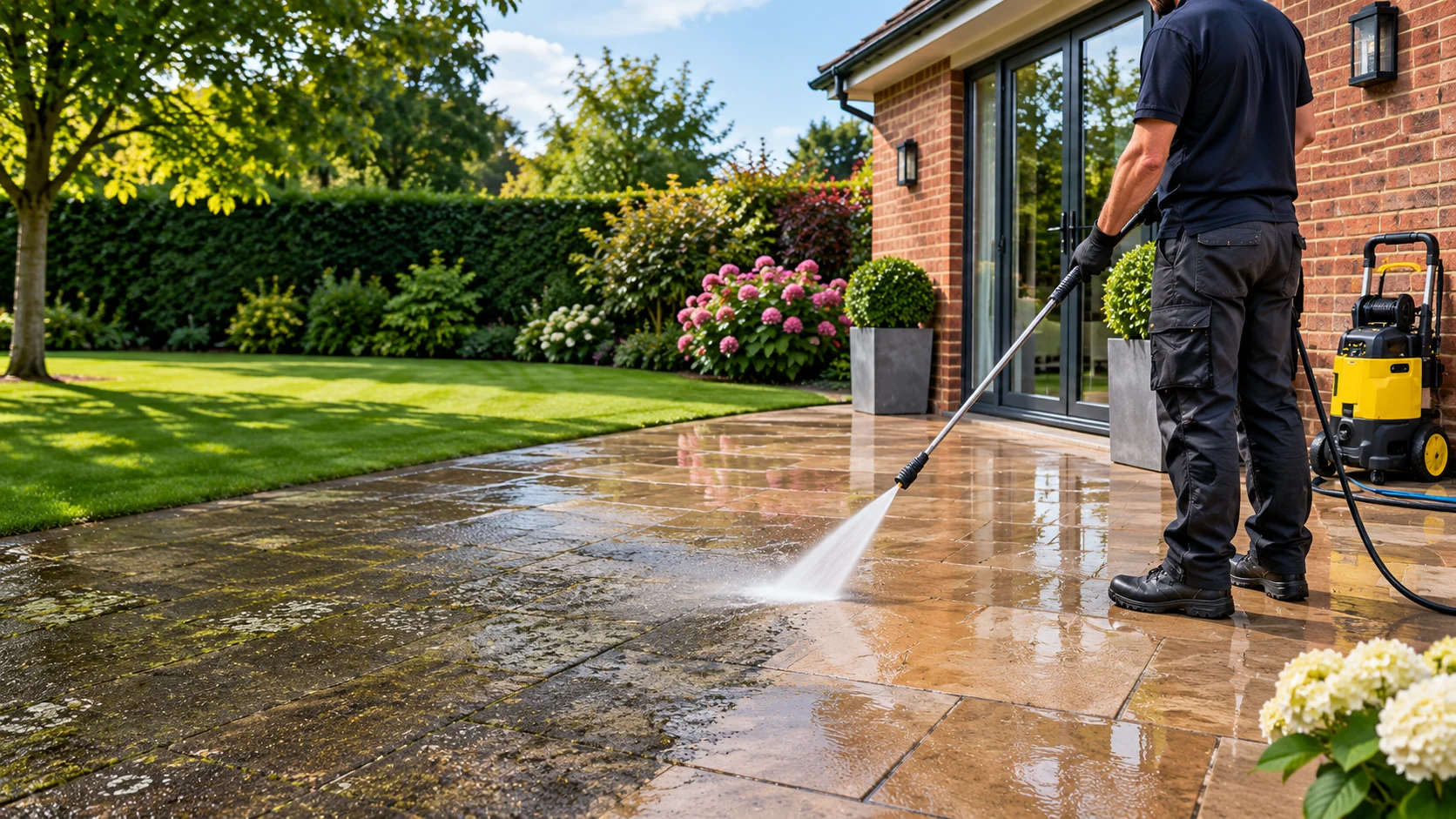
Careful exterior cleaning removes everyday build-up and improves the appearance of outdoor spaces. The starting point is knowing the material, the condition of the surface and the finish you want to achieve.
A useful starting point is a conversation about the surface, its condition and the finish you would like to achieve. Any proposed result depends on what we find and what the material can tolerate.
We consider material, age, existing wear and vulnerable joints before selecting a process.
We explain the proposed scope, expected outcome and any limitations before work begins.
Access, movable items, drainage and neighbouring areas are discussed as part of planning.
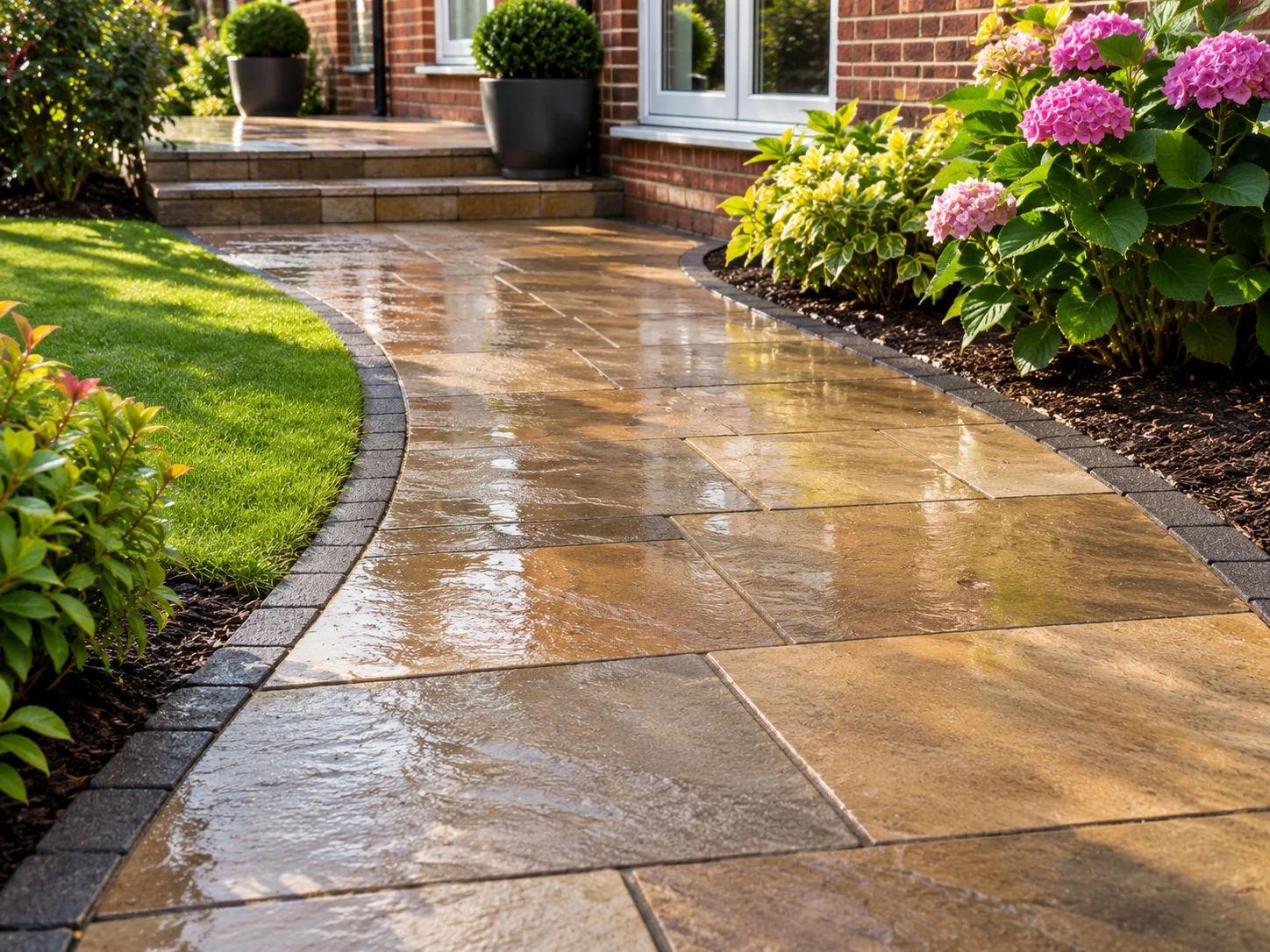
Preparation may include moving pots or lightweight furniture, checking the route for hoses and identifying any delicate nearby surfaces. The precise requirements will depend on the job.
Following cleaning, joints or finishes may need further attention. For example, some block paving requires appropriate re-sanding after drying; this should be agreed within the quoted scope.
Exterior cleaning is not one-size-fits-all. Before selecting a method, it helps to know whether paving is natural stone or manufactured, whether mortar joints are sound, and whether the surface has been sealed, painted or repaired previously. A uniform appearance is not always possible on aged materials.
Practical matters deserve attention too: the position of drains, access through gates, nearby planted beds, electrical fixtures and the route equipment will take. These are details we encourage customers to raise when requesting a quotation.
We aim to set out what is being proposed and distinguish cleaning from repairs or restoration. A quotation should identify the surfaces included, the access assumptions and any extra steps such as re-sanding or a separate treatment. Those should never be silently assumed.
For a useful enquiry, it helps when the customer and contractor understand the same scope of work. Clarifying the surface, access, potential risks and expected result in advance allows sensible decisions, even when that means recommending a different treatment.
Tell us what needs cleaning, where it is and what the surface is made from. We’ll explain the next steps.